



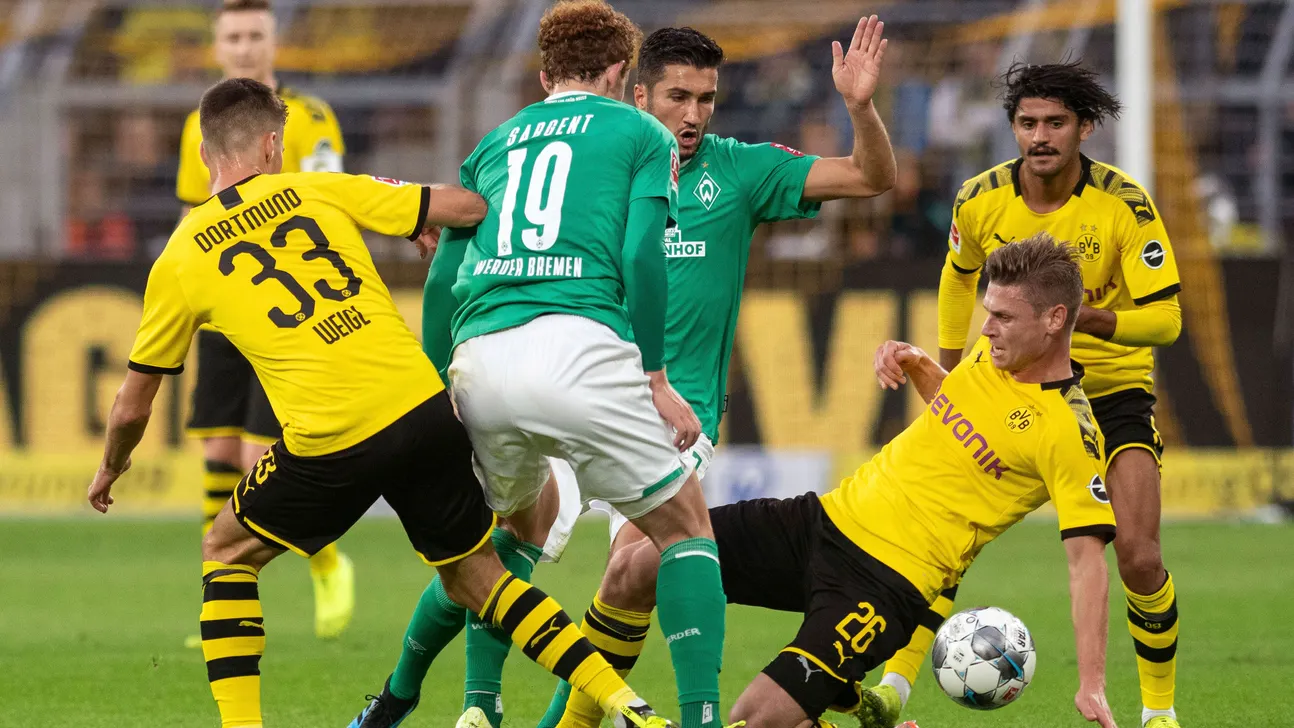
Mainstream betting volume routinely responds to player unavailability through crude reputation metrics rather than tactical system dependency. When a marquee goalscorer or celebrated defender is sidelined by disciplinary sanctions or physical trauma, public consensus immediately downgrades the affected club by a generic margin, driving premature line movement. The 2010/2011 German Bundesliga season provided an exceptional laboratory for examining this dynamic. While Bayern Munich struggled to maintain tactical cohesion during prolonged absences of Franck Ribéry and Arjen Robben, Borussia Dortmund thrived despite key injuries because their underlying counter-pressing structure prioritized collective spatial occupation over individual brilliance. For serious market participants, interpreting squad absences requires assessing the precise operational drop-off between primary personnel and functional replacements to determine whether moving lines reflect genuine competitive degradation or reactionary market bias.
Distinguishing Tactical Linchpins from Replaceable Star Names
The structural importance of an absent player rarely correlates directly with their market visibility or transfer valuation. An elite domestic team can frequently compensate for the absence of a primary center-forward by shifting tactical focal points to dynamic wide runners or late-arriving central midfielders. Conversely, removing an unheralded defensive midfielder who shields transition channels disrupts the entire defensive spine, exposing center-backs to direct counters and inflating opposition shot quality. During the 2010/2011 season, teams losing their primary midfield ball-winners suffered much sharper performance drops than those missing nominal headline stars, demonstrating that squad depth must be evaluated by tactical role rather than commercial reputation.
Asymmetrical Impacts of Unavailability Across Positional Hierarchies
A comprehensive evaluation model categorizes absences based on how severely a missing player degrades a club’s strategic game plan. When an individualized isolation winger is sidelined, an offensive unit loses one-on-one dribbling volume; when a vocal sweeper or distribution hub is suspended, the entire squad experiences buildup paralysis.
Structural Degradation Profiles Under Key Personnel Losses
To measure how individual absences disrupt baseline team output, the positional hierarchy of the 2010/2011 campaign illustrates distinct operational failure points.
| Absent Role Profile | Strategic Mechanism Lost | 2010/11 Bundesliga Case | On-Pitch Structural Outcome | Market Reaction Accuracy |
| Dynamic 1v1 Winger | Flank isolation and wide overload | Arjen Robben (Bayern Munich) | Attacking predictability; congested central areas | Accurate; offensive creation dropped sharply |
| Deep Progression Pivot | First-phase ball circulation | Nuri Şahin (Borussia Dortmund) | Slower vertical release; compromised counter-press | Moderately inaccurate; team press masked deficit |
| Central Aerial Anchor | Set-piece and cross clearance | Christoph Metzelder (Schalke 04) | Elevated concession on aerial second-phase balls | Inaccurate; public underestimated defensive collapse |
| Transition Target Forward | Direct long-ball outlet hold-up | Edin Džeko (Wolfsburg departure) | Inability to relieve pressure; territorial loss | Highly accurate; permanent offensive decline |
The tactical consequences detailed across these operational profiles show that absence analysis requires context-specific evaluation rather than uniform point deductions. While Bayern Munich’s system depended heavily on individual brilliance on the flanks, Dortmund’s collective pressing structure absorbed individual midfield injuries with minimal performance degradation, creating repeated opportunities to back undervalued lines against fearful public sentiment.
Tactical Reshaping and System Contraction Under Squad Depletion
Coaches rarely replace a unique talent with an identical direct substitute; they alter the entire tactical formation to protect remaining personnel. When key creators are absent, pragmatic managers abandon high-possession expansive models in favor of compact, low-block defensive shells designed to secure low-event draws.
Evaluating these managerial adjustments reveals a predictable sequence of tactical changes that alter market probabilities:
- Central midfields compress deeper to protect backup center-backs lacking elite lateral recovery speed.
- Fullbacks are instructed to abandon overlapping runs to prevent transitions down vacated wide avenues.
- Overall team line depth drops ten to fifteen yards, conceding territorial control while eliminating space behind.
- Forward lines transition from coordinated pressing to passive harassment, slowing total match pace.
- The expected total goals distribution shifts downward, turning pre-match over-lines into negative expected value.
Recognizing these systemic adjustments before kickoff prevents an analyst from making the mistake of backing the opposing team on the handicap simply because a favorite is missing an attacker. If the favored club responds by adopting a hyper-conservative, defense-first shape, the true value frequently shifts toward under-totals or low-margin handicap outcomes that public bettors ignore.
Exploiting Public Overreactions in Early Market Pricing Windows
The immediate aftermath of a high-profile injury announcement typically sparks an aggressive rush of speculative liquidity that pushes odds far beyond their mathematically defensible boundaries. Casual participants see a headline confirming a two-match suspension for a leading goalscorer and instinctively sell positions on that club, allowing opening handicap lines to drift.
When liquidity gathers momentum across an active betting destination like ufa168, comparing early line shifts against historical replacement metrics reveals whether a favorite has been over-penalized for an isolated lineup change. If market sentiment drives a competitive team’s handicap out by half a goal merely due to the absence of an individual finisher whose underlying conversion rate was already due for regression, sharp analysts take the contrarian position, capturing inflated odds on a structurally stable squad that retains its core defensive cohesion.
Deceptive Team News: The Hazard of Incomplete Medical Data
A major pitfall in team news interpretation is relying on superficial injury designations that fail to disclose true physical capacity. Players frequently return to competitive action well before achieving match fitness, carrying muscular restrictions or pain-management injections that subtly impair acceleration and turning radius. In 2010/2011, several clubs rushed central defenders back from hamstring strains to address injury crises, only for those players to be exploited by fast wingers and substituted before halftime.
Treating a returning starter as fully operational based merely on their inclusion on the team sheet introduces severe blind spots into pre-match models. If an athlete lacks full aerobic conditioning, their presence on the pitch can actually compromise defensive structure more than fielding a fully fit, motivated backup who possesses complete mobility.
Maintaining Focus and Avoiding Speculative Mental Drift
Isolating actionable edges from complex squad availability reports requires hours of patient cross-referencing across localized press reports, training photos, and tactical depth charts. When mid-week slates present limited actionable data and team news remains ambiguous, bettors often experience cognitive fatigue that weakens disciplined analytical habits.
A sudden lapse in concentration during slow news cycles can prompt an operator to seek immediate stimulation, with some turning toward an interactive casino online portal where random mechanics entirely bypass strategic research. Engaging with high-frequency games of pure chance degrades the critical, patient mindset required to dissect intricate team news, introducing uncorrelated balance volatility that drains capital intended for researched sports value. Maintaining strict boundaries around analytical workflows guarantees that both bankroll resources and analytical attention stay focused on measurable match variables.
Late Lineup Volatility and Confirmation Window Protocols
Modern professional sports wagering requires strict execution timing, as the release of official team sheets sixty minutes before kickoff marks the definitive inflection point for market efficiency. Pre-match speculation regarding a player’s availability often creates fluctuating odds, but only the confirmed lineup reveals whether a manager is bluffing or executing an unexpected tactical pivot.
Developing a systematic execution protocol during the sixty-minute confirmation window separates professional operators from reactive speculators. Rather than blindly reacting to unexpected scratches, an analyst cross-references the official lineup against pre-modeled substitute ratings, calculating the precise net-rating differential within minutes. This rapid quantitative audit determines whether the market has under-adjusted or over-reacted to the late revelation, allowing for precise execution before automated syndicates fully compress the remaining value.
Summary
Interpreting injury and suspension news throughout the 2010/2011 Bundesliga season confirms that personnel absences cannot be evaluated through generic, reputation-based downgrades. Actionable betting value emerges from understanding tactical system dependency, distinguishing between irreplaceable structural linchpins and replaceable finishers, and identifying managerial adaptations that alter game pace. By accounting for public overreactions to celebrity absences, vetting the true physical condition of rushed-back starters, and adhering to disciplined late-lineup execution protocols, market participants transform volatile team news into a consistent, empirical source of market advantage.
