



Planning a trip is exciting. But for pool owners, it often comes with one lingering question: what will the pool look like when I get back?
The good news is that a week or two of reduced attention does not automatically mean a green pool or broken equipment. With a few simple steps before you leave and a clear plan for your return, the situation is usually manageable.
This article covers what tends to happen when a pool is left unattended, how to prepare for different scenarios, and what to check when you walk back through the door.
What Can Happen When a Pool Is Left Unattended
Algae Growth
Without regular chlorination, algae spores that are naturally present in the water can begin to multiply. Warm weather and direct sunlight accelerate this process. A pool that was clear before departure can show visible changes within a few days if chlorine levels drop too low.
To reduce this risk, test and balance your water chemistry before you leave. A chlorine floater with slow-dissolving tablets can help maintain levels while you are away. Adding a backup algaecide may provide extra protection in warmer conditions.
Always follow the instructions on pool chemical labels. If you are unsure about the right dosage for your pool size, a local pool store or a pool professional can provide guidance.
Equipment Strain
A less visible but potentially costly issue is filter and pump strain. As debris accumulates in the skimmer basket and filter, water flow can become restricted. In some cases, this can lead to the pump running under stress or overheating.
Prevention is straightforward. Clean the skimmer basket, pump basket, and filter before you leave. A system that starts clean can handle more accumulation before it becomes a problem.
If you plan to be away for more than a week, consider asking a neighbor or hiring a pool service to check the equipment once in the middle of your trip. A five-minute visit to empty the skimmer and glance at the pressure gauge can make a meaningful difference.
Weather Events
A thunderstorm can dump debris, dilute chemicals, and introduce contaminants within hours. A power outage can stop circulation for an extended period. These events are unpredictable, but their impact can be reduced with some preparation.
If storms are in the forecast while you are away, a pool cover can help keep debris and excess rainwater out. If you do not use a cover, make sure the chlorine floater is well-stocked before you leave.
For pools in areas prone to summer storms, having a neighbor or service check on the pool after a heavy rain is a practical safeguard.
What to Do Before You Leave
The steps below are designed to give your pool a clean starting point. They take about 15 minutes and apply to most residential pools. If your pool has specific equipment or unique features, adjust accordingly.
Water Chemistry
Test your water 2 to 3 days before departure. Adjust chlorine, pH, and alkalinity to their recommended ranges. Shock the pool the evening before you leave, after the sun has gone down. This gives the chemicals time to work without UV interference.
If you use a chlorine floater, place it in the pool a day before departure so the tablets have time to start dissolving. Always refer to the product label for guidance on the correct number of tablets for your pool volume.
Cleaning and Filtration
Remove all debris from the surface and floor. Brush the walls and waterline. Vacuum the entire pool so it starts your vacation as clean as possible. A clean pool is easier to maintain than one that already has organic material breaking down in the water.
Clean or backwash the filter. Empty the skimmer basket and pump basket. Set your pump timer to run at least 8 to 10 hours per day. For variable-speed pumps, a lower speed over a longer period is often more efficient.
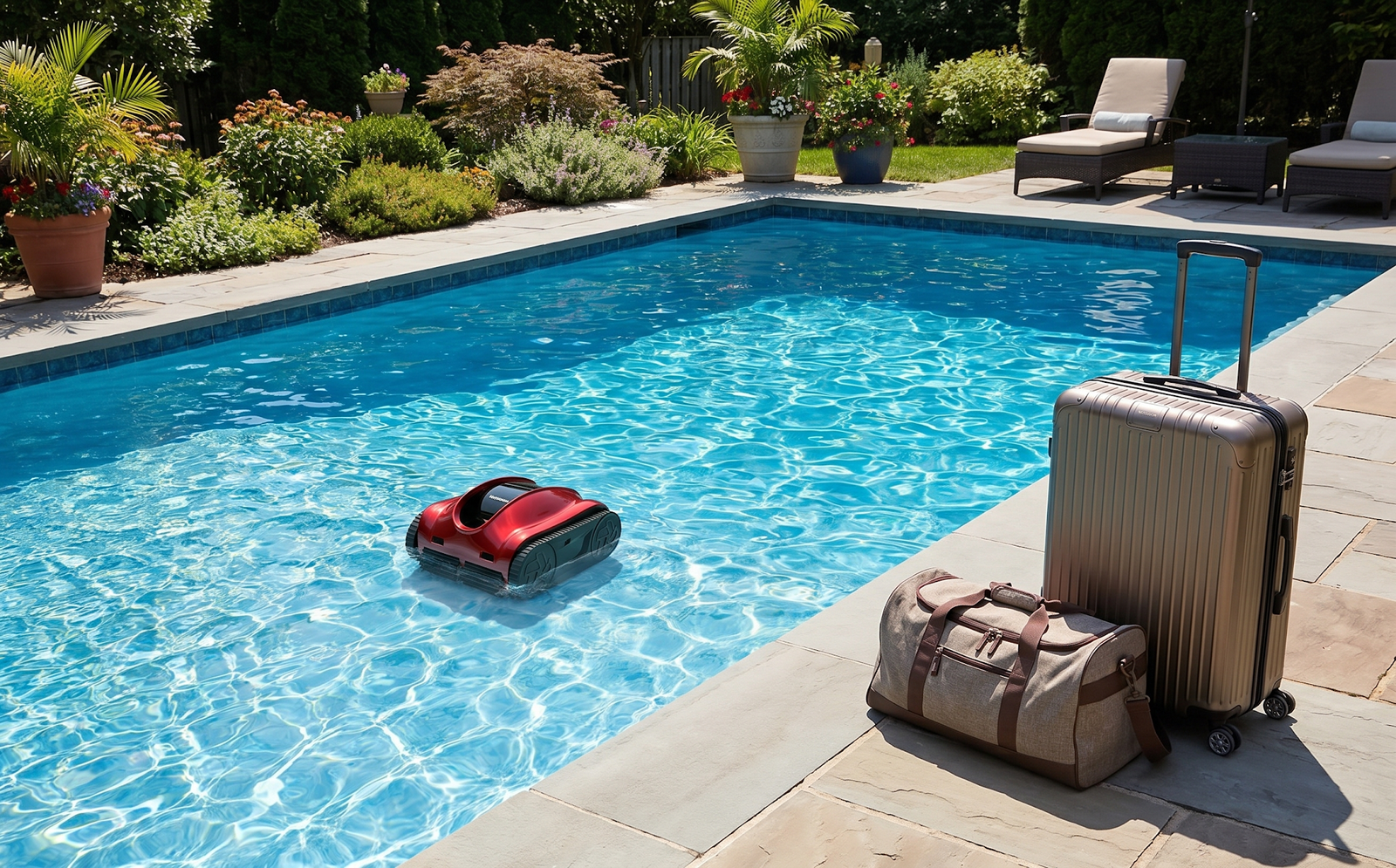
A robotic pool cleaner may help maintain floor cleanliness while you are away. It can be set to run on a schedule, picking up debris that falls in during your absence. This is one option homeowners may consider when they want to reduce the build-up of organic material in the water.
Always check your equipment manual for guidance on setup and scheduling.
Adjusting for Different Trip Lengths
A weekend trip requires less preparation than a two-week holiday. For short trips of 2 to 3 days, a standard shock and a chlorine floater are usually sufficient.
For trips of one week or more, consider the additional measures described earlier: a backup algaecide, a neighbor check, and possibly a pool cover. The longer the pool goes without attention, the more important it is to start with clean equipment and balanced chemistry.
For extended absences of two weeks or longer, a professional pool service visit once a week is a reasonable option. They can test the water, clean the skimmer, and address any issues before they escalate.
Pre-Departure Checklist
The checklist below groups the key tasks by category. Each item addresses a specific risk mentioned in the previous sections. Going through this list takes about 15 minutes.
- Test and adjust chlorine, pH, and alkalinity
- Shock the pool the evening before departure
- Place a chlorine floater in the pool
- Remove all debris from the surface and floor
- Brush walls, steps, and waterline
- Vacuum the entire pool
- Clean or backwash the filter
- Empty skimmer and pump baskets
- Set the pump timer to 8-10 hours daily
- Set the automatic cleaner schedule if available
- Secure the pool cover if storms are forecast
- Arrange a mid-trip check if away for more than a week
Once these steps are done, your pool has a clean baseline. The combination of balanced chemistry, clean equipment, and regular circulation gives it the best chance of staying clear while you are away.
What to Check When You Return
When you get back, take a moment to assess the pool before adding any chemicals or running extra cycles.
Start with a visual check. Is the water clear, slightly cloudy, or green? Are there leaves or debris on the surface? Clear the visible debris first.
Then test the water. Check chlorine, pH, and alkalinity. If the levels are within range and the water looks clear, a standard shock that evening is usually enough to refresh the pool.
If the water is cloudy or has a green tint, do not add large amounts of chemicals all at once. Start by running the filter continuously and brushing the walls. Test the water and adjust gradually. In many cases, the water begins to improve within a few days of consistent filtration and balanced chemical adjustments.
If the water does not improve after several days, or if the equipment shows warning signs such as unusual noise or high pressure, contacting a pool professional is a good next step.
A Practical Approach to Pool Care While Traveling
A pool does not need perfect attention while you are away. It needs a clean starting point, a few simple safeguards, and someone to notice if something unusual happens.
The steps described in this article are based on common residential pool care practices. Every pool is different, and adjustments may be needed based on your equipment, climate, and the length of your trip.
When in doubt, a local pool professional is the best source of advice for your specific setup.
