



When talking about iconic luxury watches, one name stands out among the crowd: Pasha de Cartier. For decades, this watch has embodied Cartier’s fearless blend of craftsmanship, design innovation, and cultural significance. Whether worn by celebrities, business leaders, or watch enthusiasts, the Pasha de Cartier remains a symbol of prestige and enduring style.
In this article, we explore the world of the Pasha de Cartier in depth—its history, design elements, cultural impact, technology, variations, ownership experience, collectibility, and much more. This is a complete guide for anyone who wants to understand why this timepiece has captivated generations.
Origins of Cartier: Luxury Rooted in History
To understand the significance of the Pasha de Cartier, we must first look at the history of the company that created it.
Founded in 1847 by Louis‑Francois Cartier in Paris, Cartier quickly built a reputation for quality and elegance. It wasn’t long before European nobility and royalty began to seek out Cartier for jewelry and watches that were both beautiful and technically superior.
Cartier’s innovations include the wristwatch for men and the first deployment clasp—small contributions that, together, helped elevate the wristwatch from functional tool to personal statement.
Cartier’s early designs were notable for their clarity, balance, and refined taste, with famous models like the Tank and Santos defining new categories of watches that combined form and function.
The Birth of a Legend: Pasha de Cartier History
How It All Began
The story of the Pasha de Cartier dates back to the 1980s, although its origins are linked to a much earlier moment. According to Cartier lore, the very first inspiration came from a custom watch made for the Pasha of Marrakech, Thami El Glaoui in the 1930s.
The Pasha—an influential leader during the era of French colonial rule in Morocco—reportedly wanted a watch that could be worn while swimming without damage. Cartier delivered a design that was water‑resistant, attached to a chain, and easily readable—a rare combination at the time.
Although the early prototype eventually became legendary, it wasn’t until the 1980s that Cartier officially launched the Pasha as a collection, bringing this daring design into mainstream luxury watch culture.
The 1980s Relaunch
The year 1985 marked a turning point for Cartier as the Pasha de Cartier debuted as a full collection. It was unlike anything else on the market:
- Bold and round case (unusual for Cartier’s traditionally rectangular styles)
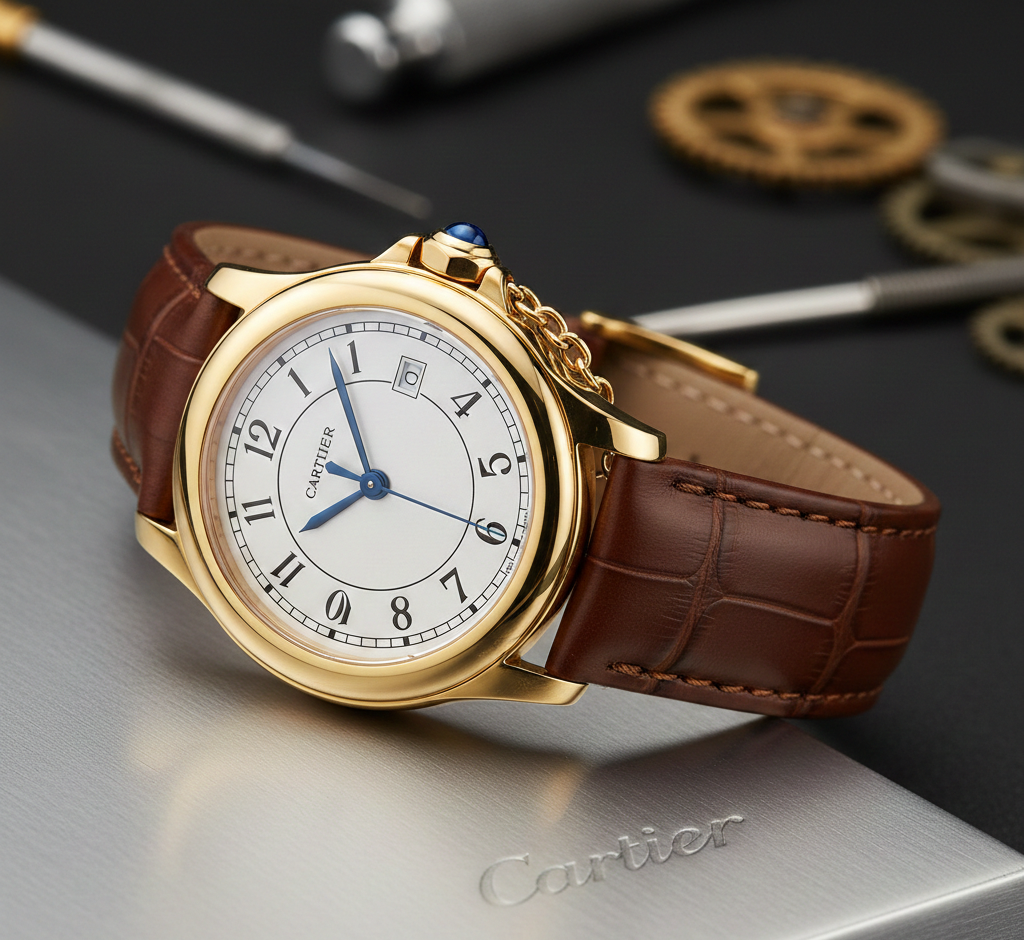
- A screw‑down crown cover attached by a small chain
- Oversized numerals and uncluttered dial
- Water‑resistant design that nodded to its original purpose
This combination of form, function, and story helped the Pasha cut through the noise of the luxury watch market. Its design was at once robust and elegant—luxurious yet sporty. It quickly became a mainstay in Cartier’s lineup.
Design Elements That Define Pasha de Cartier
The Pasha de Cartier’s design is iconic and instantly recognizable. Unlike traditional Cartier watches, which favor straight lines and sharp angles, the Pasha is defined by roundness, curves, and a bold sense of proportion.
Let’s look closely at the key design elements that make the Pasha distinct:
1. The Round Case
While many Cartier watches are famous for their rectangular or square cases (Tank, Santos), the Pasha is highly distinctive for its round case. This circle‑dominant silhouette was revolutionary for Cartier, marking a departure into uncharted aesthetic territory.
- Sizes vary but often range between 35 mm to 41 mm or larger in modern editions.
- The rounded profile enhances the watch’s presence on the wrist, giving it a sporty yet sophisticated look.
This circular form symbolizes unity, timelessness, and elegance—qualities that have helped the Pasha maintain popularity over decades.
2. Screw‑Down Crown and Chain
One of the Pasha’s most iconic visual trademarks is its crown cap, secured by a tiny chain.
- The chain attaches the crown cover to the case, preventing it from being lost.
- The crown cover itself screws down for water resistance, emphasizing durability and utility.
This feature was originally a functional response to the Pasha of Marrakech’s request for a water‑safe timepiece. Today, it’s a stylistic signature that distinguishes the Pasha from other watches.
3. Bold Numerals and Dial Design
Pasha de Cartier dials often include large Arabic numerals at key positions, combined with a clean, uncluttered layout.
- The fonts used are distinctive and lend a playful, confident air.
- Minute tracks, railroad indices, and subtle branding balance the bold numerals.
The dial also features sword‑shaped hands, echoing classic Cartier design language.
4. Bracelet and Strap Options
Over the years, the Pasha has been offered in a variety of strap and bracelet configurations:
- Steel bracelets with polished and brushed finishes
- Leather straps for an elegant or casual look
- Two‑tone options combining steel and gold
Many modern versions include QuickSwitch systems, allowing effortless swapping of straps without tools.
The Innovation and Technology Inside
Under its elegant exterior, the Pasha de Cartier houses some of the best watchmaking innovations available.
Movement and Precision
Cartier uses both automatic mechanical movements and quartz options in the Pasha line:
- Automatic movements use a rotor that winds the mainspring as you wear the watch, offering smooth sweeping seconds hands and craftsmanship prized by connoisseurs.
- Quartz movements provide accurate timekeeping with minimal maintenance, appealing to practical users.
Some models include complications such as:
- Date windows
- Small seconds subdials
- Chronograph functions
- Power reserve indicators
These features broaden the appeal of the Pasha and underline Cartier’s technical expertise.
Variations and Collections Through the Years
The Pasha de Cartier is not a single static model but a family of watches—each with its own character.
Classic Pasha
The heart of the collection is the classic Pasha:
- Clean three‑hand design
- Traditional dial with Arabic numerals
- Signature crown with chain
This is the version that most resonates with the original historic inspiration.
Pasha Chronograph
For fans of sports watches, Cartier developed chronograph versions of the Pasha, adding stopwatch functions and extra subdials.
- Offers measurement of elapsed time
- Adds dynamic visual complexity
- Appeals to those who want both style and performance
Pasha with Date and Small Seconds
These variations include useful complications that maintain design balance without overwhelming the dial.
High‑Jewelry and Special Editions
Cartier also releases special versions of the Pasha adorned with diamonds, colored gemstones, or unique artistic touches:
- Gem‑set bezels
- Artistic dials
- Limited editions honoring cultural moments
These show Cartier’s mastery in marrying haute joaillerie with horology.
Material Choices: Steel, Gold, and More
Pasha de Cartier watches come in a variety of materials:
- Stainless steel – sporty, versatile, and durable
- Yellow gold – classic luxury and warm tones
- Rose gold – elegant and modern
- Two‑tone steel and gold – balanced and stylish
Each material brings its own personality. Steel leans casual and resilient, gold makes a bold luxury statement, and two‑tone offers a bridge between worlds.
Cultural Impact and Celebrities
The Pasha de Cartier has been worn by influential people across industries—actors, musicians, athletes, and business leaders.
Because of its bold design and prestige, it became especially popular in the late 20th century with celebrities who appreciated its visibility and flair.
In movies, red‑carpet events, and public appearances, the Pasha signals status without shouting—and its design remains instantly recognizable to watch lovers.
The Pasha in Modern Times
In the 21st century, Cartier has continued to evolve the Pasha while staying true to its roots.
Reinterpretations and Updates
Recent releases have modernized some elements:
- Slight tweaks to case dimensions
- Updated movements with improved accuracy
- Enhanced water resistance and materials
At the same time, Cartier preserves the core DNA of the Pasha—its round case, distinctive crown chain, and expressive numerals.
Why People Love the Pasha de Cartier
What makes the Pasha special? Enthusiasts cite several reasons:
1. Design That Breaks Tradition
Cartier reinvented itself with the Pasha. At a time when much of luxury watch design felt safe or retro, the Pasha embraced curves, bold fonts, and functional elements that felt fresh.
The result is a watch that feels confident and daring.
2. Story and Heritage
The narrative behind the Pasha—linked to a real figure and a genuine functional request—adds depth that goes beyond aesthetics.
3. Versatility
The Pasha can be elegant or sporty, casual or formal, depending on the strap and material.
This makes it a favorite for people who want a single watch that works across occasions.
4. Quality and Craftsmanship
Cartier doesn’t build cheap watches. The materials, movements, and finishing all reflect high standards that collectors appreciate.
Buying a Pasha de Cartier: What to Consider
If you’re thinking of buying a Pasha de Cartier, here are key points to keep in mind:
1. New vs Pre‑Owned
- New models come with warranty, modern specs, and untouched condition.
- Vintage or pre‑owned can offer value and historical appeal but require careful authentication.
2. Movement Type
Do you prefer:
- A mechanical automatic, admired for craftsmanship?
- Or quartz, praised for accuracy and low maintenance?
Both have advantages.
3. Size and Fit
Consider your wrist size:
- Smaller wrists may favor the classic sizes (35–38 mm).
- Larger wrists might choose modern 40–42 mm variants.
Comfort matters as much as looks.
4. Straps and Bracelets
Think about how you’ll wear the watch:
- Leather for formal occasions
- Steel for daily wear
- Rubber (on certain versions) for sport
Some modern versions even allow easy strap swapping.
Collectibility and Investment
While watches are primarily personal accessories, certain Pasha de Cartier models have become collectible:
- Early editions from the 1980s and 1990s
- Limited editions
- Rare material combinations
Collectors value originality, condition, and documented history.
Reliable authentication and expert appraisal are crucial for valuable pieces.
Care and Maintenance
To keep a Pasha de Cartier in prime condition:
- Service every 4–7 years (mechanical models)
- Avoid extreme shocks and magnetic fields
- Keep water resistance seals checked after years of use
- Store in a watch box to protect from dust
Proper care ensures longevity and performance.
Icon vs Trend: Why Pasha Endures
Fashion is temporary, but some designs endure. The Pasha de Cartier has survived decades of shifting tastes because:
- It is true to its identity.
- It doesn’t copy others.
- It balances elegance with individuality.
In a world crowded with options, the Pasha stands out—rooted in history but forever modern.
Final Thoughts: The Legacy of Pasha de Cartier
The Pasha de Cartier isn’t just a watch. It is a statement—a blend of innovation, audacity, and heritage. From its origins inspired by a Moroccan leader to its rise as a popular luxury staple, the Pasha bridges time and taste.
Whether you are a seasoned collector or someone buying their first luxury watch, the Pasha de Cartier represents more than time—it reflects personality, legacy, and refinement.
In the world of horology, few watches manage to be both technically admirable and culturally significant. The Pasha is one of them—timeless yet ever relevant.
READ MORE: NEWZTOP.CO.UK
