



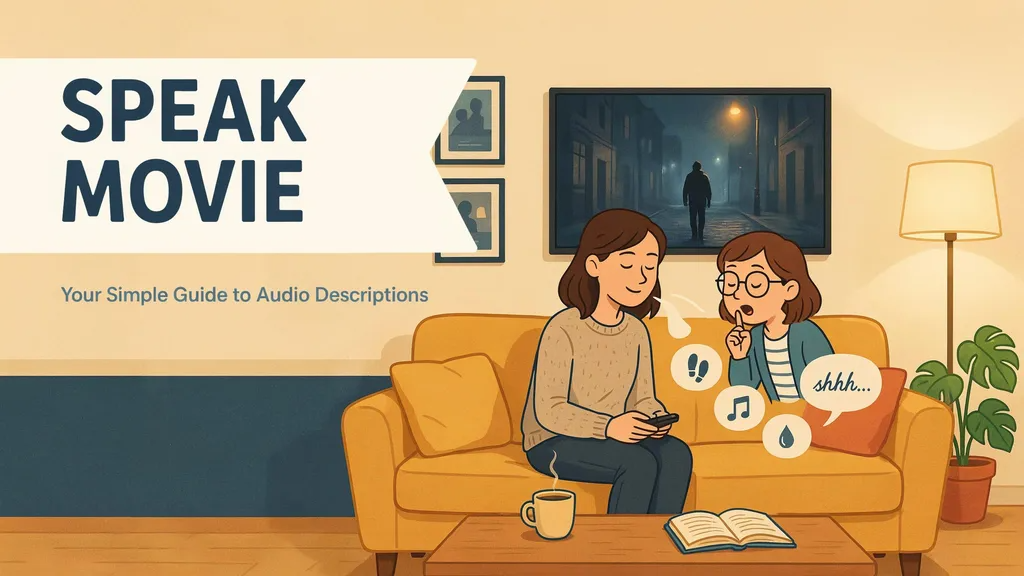
Have you ever closed your eyes while watching a Speak Movie? Try it for a minute. You might hear footsteps, a door creaking, or sad music playing. But without the picture, it can be hard to know exactly what is happening on the screen.
This is where a “speak movie”—more commonly known as an audio description—comes in to save the day. Think of it as a helpful friend sitting next to you, whispering all the important visual details into your ear.
What Exactly Is a Speak Movie?
An audio description track adds an extra narrator to a film. While the characters take a break from talking, the narrator describes the action. They might say, “Sarah smiles and drops her keys,” or “A huge red spaceship flies across the dark sky.”
These extra spoken words fill in the gaps for people who are blind or have low vision. It turns a regular film into a fully accessible experience. You get to hear the emotion in the voices, the sound effects, and the visual story all at the same time.
Why Audio Descriptions Matter for Everyone
You might think audio descriptions are only for people with vision loss, but that is not true! Many people love using this feature in fun and surprising ways.
For example, I love turning on audio descriptions when I am folding laundry or cooking dinner. I can listen to the story like an audiobook while keeping my eyes on my chores. It is also a fantastic tool for language learners who want to connect spoken words to visual actions. When movies have narration, it becomes much easier to follow the plot without staring at the screen every single second.
How Voice Tracks Work in Modern Cinema
Making these special audio tracks takes a lot of hard work and care. Writers watch the film and choose the most important visual moments. They have to write short, punchy sentences that fit perfectly between the normal dialogue.
Next, professional voice actors record these lines. They use a calm, clear, and friendly voice so they do not distract from the movie’s original sound effects. The audio engineers then mix this new voice track into the movie so it sounds smooth and natural.
Finding the Right Narration Style
The best narrators do not just read words off a page; they match the mood of the film. If a movie is scary, their voice might sound tense. If the scene is funny, they might sound light and playful.
This careful acting helps set the scene just right. It ensures that no matter what is happening on screen, the listener feels the exact same emotions as someone watching the bright visuals.
Using Assistive Technology in Theaters
Did you know you can use audio descriptions in a real movie theater? It is true! Most modern movie theaters offer special equipment for guests who need it.
When you buy your ticket, you can ask the staff for a special headset. This lightweight device plays the extra narration just for you, while everyone else hears the normal movie sound. It is a wonderful way to enjoy opening night with your friends and family without missing a single joke or surprise.
Streaming Films with Spoken Narration at Home
Watching movies at home has never been easier thanks to modern streaming platforms. Netflix, Disney+, Apple TV, and Amazon Prime now include audio tracks for thousands of popular titles.
To use this feature, simply look for the audio or subtitles menu before you press play. Look for your language with the letters “AD” next to it. Clicking that button turns on the extra narration instantly, giving you a premium, accessible movie night right on your couch.
Choosing the Best Sound Settings
Getting the right mix of sound is key to a great movie night. Sometimes, the background music can be too loud, making the narrator hard to hear.
Most smart TVs and streaming boxes let you adjust the audio settings for better clarity. You can usually choose a setting that makes human voices louder and clearer. Taking a few seconds to tweak these knobs ensures you catch every single spoken detail.
A Personal Story: Watching With My Grandfather
I first learned about audio descriptions when my grandfather started losing his eyesight. He was a huge fan of classic cinema and westerns, but he felt sad when he could no longer see the actors’ faces or the beautiful sunsets.
The day we discovered the narration track on his favorite streaming app changed everything. Suddenly, he could enjoy his favorite westerns again. Hearing the narrator explain the quick draw of a cowboy’s gun brought the excitement right back into his living room. It was a beautiful reminder of how technology keeps us connected to the stories we love.
The Future of Accessible Entertainment
The world of film is becoming kinder and more inclusive every single day. Movie studios are realizing that making films accessible from day one makes the world a better place for everyone.
In the future, we might even see smart glasses that provide real-time descriptions for live theater and movies. The goal is simple: ensuring that every single person can enjoy a good story, no matter how they experience the world around them.
Conclusion
A “speak movie” opens up amazing new worlds for people of all abilities. By mixing rich audio tracks with clever visual storytelling, these narrated films ensure that nobody gets left out of the fun.
Have you ever tried watching a film with audio descriptions turned on? Give it a try during your next movie night, and let me know how it changes the way you experience your favorite scenes!
Frequently Asked Questions
What is another name for a speak movie?
Another common name for a speak movie is an audio description or a video description track.
How do I turn on audio descriptions on Netflix?
Start playing your show, open the audio and subtitles menu, and select your preferred language track marked with “AD.”
Do I need special equipment to use this feature at home?
No, you do not need any special gear. You just need to select the matching audio track in your streaming app settings.
Are these spoken tracks available for all movies?
They are available for most new releases and popular shows, though older films may not always have them yet.
Can children use narrated films to learn how to read?
Yes, hearing the narrator describe actions while seeing the scene can help kids build vocabulary and reading skills.
Does the extra narration ruin the normal movie sound?
No, the narration is carefully mixed to play only during quiet moments so it never talks over the actors.
